Koolina Resort
Ko Olina: A Shaped Shoreline on Oahu’s West Side
Ko Olina occupies 642 acres of West Oahu coastline — a stretch of land that has shifted from aliʻi rest stops to plantation holdings to a fully engineered resort community. The name Ko Olina means “place of joy,” and long before development, this shoreline was a quiet area used for fishing, gathering, and travel.
The modern version of Ko Olina didn’t appear overnight. It sits on land once owned by James Campbell, who acquired large portions of Kapolei in the early 1900s. His long‑term vision imagined a resort destination on the west side, but the land remained ranchland for decades.
Ko Olina’s transformation began in the 1980s, when Ko Olina Properties — a subsidiary of the James Campbell Company — started shaping the coastline into the master‑planned resort that exists today. Roads were cut, lagoons were engineered, and the first hotels arrived, setting the foundation for what would become one of Oahu’s most recognizable resort communities.
Before the Resorts
The west side has always had a different rhythm than Honolulu. Hotter. Drier. Quieter. A microclimate shaped by the Wai‘anae mountains, with long stretches of sun and some of the clearest sunsets on the island.
The natural shoreline here was rougher and more exposed than the calm lagoons people know today. Freshwater springs once fed the coast, and the coves were smaller, sharper, and shaped by natural forces rather than engineering.
Plantation Era to Master‑Planned Coastline
James Campbell’s acquisition of the land in the early 1900s set the stage for future development, but the resort concept didn’t materialize until much later. For most of the 20th century, this coastline remained open ranchland.
The shift began in the 1980s and 1990s, when Jeff Stone and The Resort Group advanced the long‑delayed vision. The lagoons were carved out, infrastructure was built, and the first anchor properties took shape.
The First Wave of Development
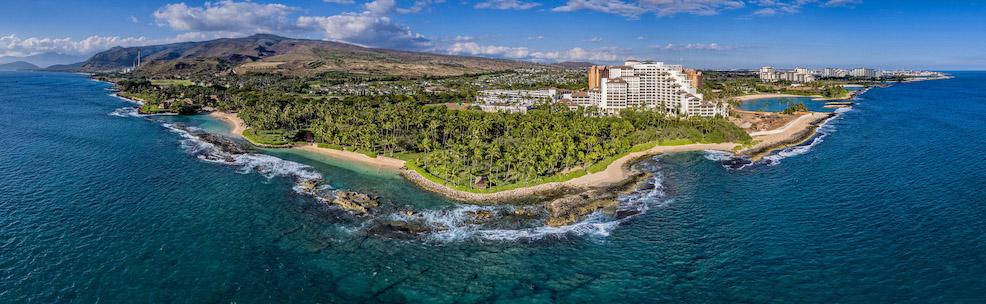
Ko Olina grew in phases, each one reshaping the coastline:
• Ihilani Resort & Spa (1993) — the first major hotel, quiet and isolated at the time. It later closed and underwent a full transformation before reopening as the Four Seasons Resort Oahu in 2016.
• Marriott’s Ko Olina Beach Club — timeshare villas that brought long‑stay visitors and families.
• Ko Olina Beach Villas — residential‑style accommodations with one‑ to three‑bedroom layouts, full kitchens, and multiple bathrooms.
• Aulani, A Disney Resort & Spa (2011) — the project that shifted Ko Olina from a quiet west‑side retreat to a major family destination.
Each addition changed the character of the coastline and the way people interacted with it.
Then & Now
Ko Olina today is a shaped environment — engineered lagoons, manicured lawns, and resort architecture set against the dry, open terrain of West Oahu.
The Manmade Lagoons
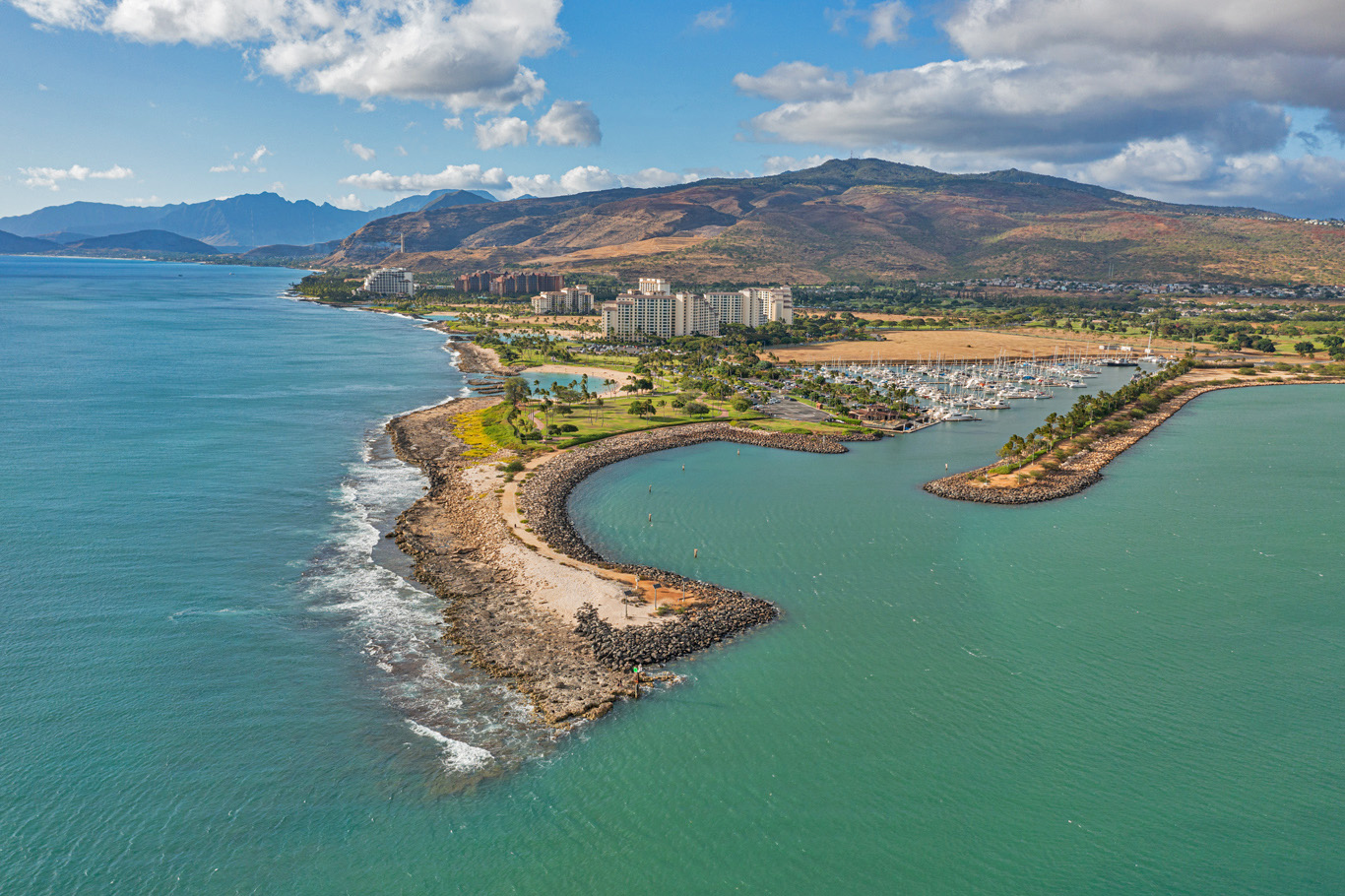
Ko Olina’s four lagoons are entirely engineered. They were carved out in the 1980s–1990s, designed to create calm, protected swimming areas on a coastline that is naturally rougher and more exposed.
Locals use them. Tourists use them. But access is controlled by limited parking, which fills early and stays full. The lagoons are public, but the experience is curated.
West‑Side Conditions
The west side is hotter, drier, and clearer than Honolulu. The sunsets are sharper. The water outside the lagoons is rougher. Spinner dolphins pass by regularly. Whales appear offshore in winter.
This microclimate is part of what makes Ko Olina feel distinct from the rest of the island.
Anchor Tenants of Ko Olina
Ko Olina Beach Villas
The Beach Villas offer some of the most residential‑feeling accommodations in Ko Olina — one‑ to three‑bedroom units with full kitchens, multiple bathrooms, and layouts designed for families and extended groups. Built during the mid‑2000s wave of development, the villas provide more space and privacy than traditional hotel rooms and sit on Lagoon 2 with views that shift from manicured lawns to open ocean. For many visitors, the Beach Villas represent a quieter, more home‑like way to experience Ko Olina.
Four Seasons Resort Oahu at Ko Olina
The Four Seasons occupies the site of the original Ihilani Resort & Spa, which opened in 1993 as Ko Olina’s first major hotel. Ihilani stood alone for years — a quiet, isolated property on a coastline still in transition. When it closed in 2015 and underwent a full renovation, the transformation into the Four Seasons signaled Ko Olina’s shift into a fully realized luxury district.
The resort features 370 rooms and suites, all oriented toward the ocean and the west‑side light. The architecture blends contemporary lines with Hawaiian references, and the property’s scale feels intentional — large enough to anchor the lagoon, but still shaped by the open space around it.
Aulani, A Disney Resort & Spa
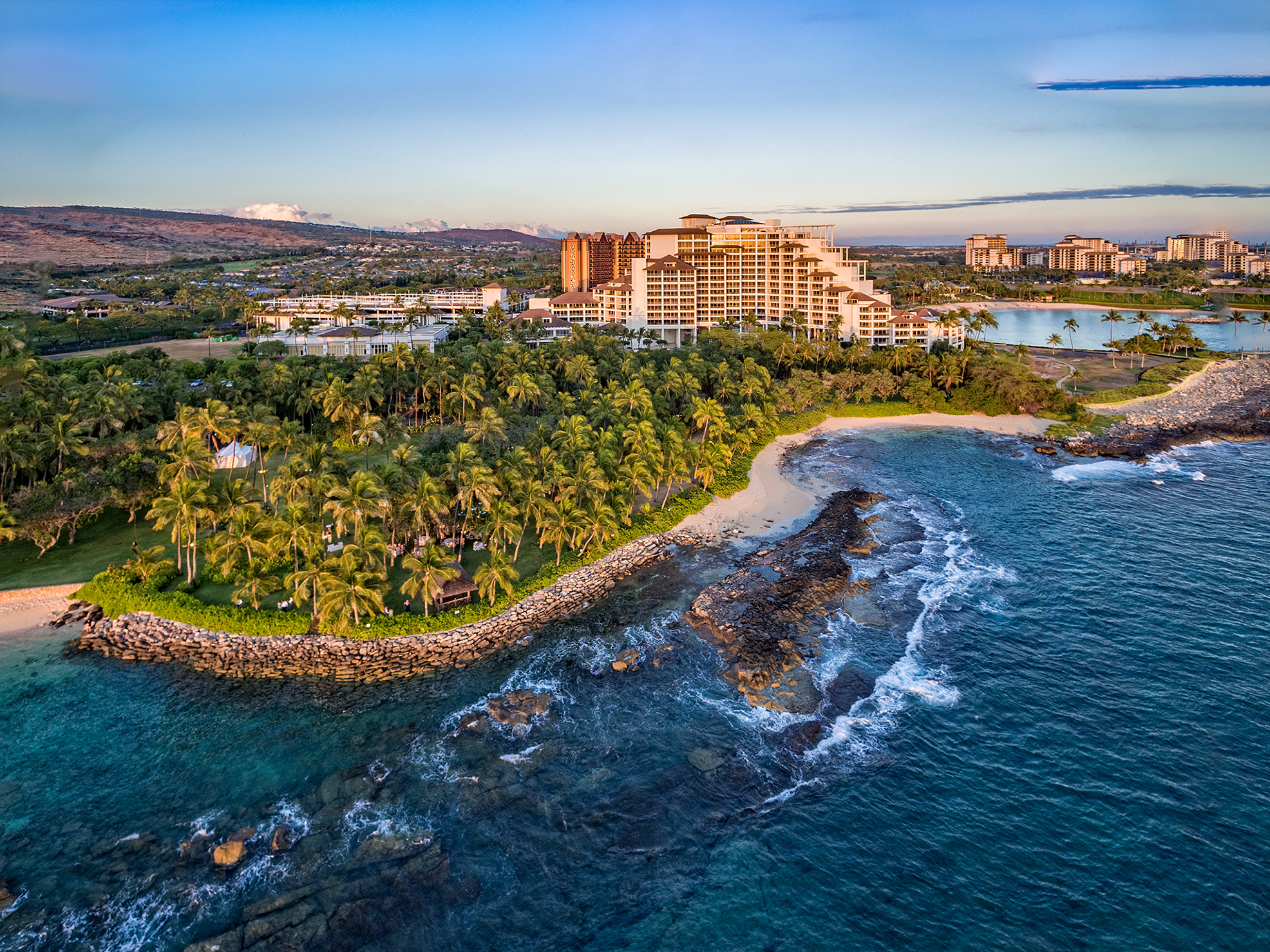
Aulani sits on Lagoon 1, and its arrival in 2011 marked a turning point for Ko Olina. Before Aulani, the west side felt quieter and more isolated; after Aulani, Ko Olina became a major family destination. The resort blends Hawaiian cultural motifs with Disney’s design language — carved wood, water features, volcanic textures, and bright colors that stand out against the dry west‑side landscape.
The property includes 359 hotel rooms and 481 villas, along with pools, a spa, and a long list of family‑oriented activities. Aulani reshaped the rhythm of Ko Olina: more foot traffic, more families, more energy.
Marriott’s Ko Olina Beach Club
Marriott’s Ko Olina Beach Club was one of the early anchors that helped define the resort community. Built as a timeshare property, it brought long‑stay visitors and families to the west side long before Aulani or the Four Seasons arrived. The villas — many with ocean views — were designed for extended stays, with kitchens, living spaces, and layouts that feel more residential than hotel‑like.
The property includes multiple pools, a fitness center, and direct access to Lagoon 3. Marriott’s presence helped establish Ko Olina as a place where visitors could stay for weeks at a time, not just a few nights.
Local Memory
Ko Olina is new compared to other parts of Oahu, but it already carries personal history. These are real comments from people who recognize the shoreline from their own lives.
• “Looks like Waimea Bay — both great places.”
• “My family vacationed here in 2005.” • “Honu Lagoon.” • “Love the coves at Ko Olina.” • “Beautiful — I want to be there now.”
Paste your Facebook embed here.
5 Things to Know About Ko Olina
1. The lagoons are engineered, not natural.
They were carved out and shaped in the 1980s–1990s, protected by rock breakwaters.
2. The west side has its own microclimate.
Long dry days, sharp sunsets, and warm evenings shaped by the Wai‘anae mountains.
3. Parking controls the experience.
Public lots fill early and stay full, which keeps the shoreline quiet.
4. Marine life is part of the daily rhythm.
Dolphins, whales, and turtles are common offshore.
5. Ko Olina is the opposite of Waikīkī.
Spaced out instead of dense. Curated instead of chaotic. Engineered calm instead of surf breaks.
Ko Olina FAQ
Is Ko Olina a natural beach?
No. The lagoons are manmade.
Why is Ko Olina sunnier than other parts of Oahu?
The Wai‘anae mountains block incoming clouds, creating a dry, sunny microclimate.
Can you see dolphins or whales at Ko Olina?
Yes — dolphins year‑round, whales in winter.
Is parking available at the Ko Olina lagoons?
Yes, but it is limited and fills early.
How is Ko Olina different from Waikīkī?
Ko Olina is master‑planned and quiet; Waikīkī is dense and urban.
Ko Olina Today
A shaped shoreline. A curated experience. A place where engineered calm meets west‑side heat, and where your panoramas document the coastline as it continues to evolve.